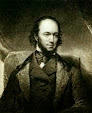

Today in 1842, my beloved Caroline was laid to rest. The following poem, written by me, was printed in the New York Tribune, unsigned, on the 16th of November 1842.
FIVE DAYS.
We parted as the day drew near its end.
The rose of health was on her beauteous cheeks.
Her quenchless love beamed sadly from her eyes,
And when I prayed that Heaven would preserve us,
She joined, with tears, as if some dreadful signal
Had gleamed upon her from another world.
“My love—my wife!” “Dear husband, may God bless you!”
And then we kissed each other fervently,
And I commended her to Him again
Who is the Friend of all who are in sorrow,
And promised quickly to come back to her.
A new embrace—oh God! how ardent was it!—
And then I tore myself from her dear arms,
With passionate kisses, and hot, streaming tears.
I looked back from the window of my carriage.
Her heavenly eyes were watching my departure,
With such unutterably deep affection
That when the winding street did hide her from me,
It seemed as if the stars were blotted out.
As if the holy angels veiled their faces,
As if God had withdrawn His high support.
The third day came, and I, afar from her,
Sat with my gay companions at the board.
The jest went round, the merry laugh rung out.
No thought of sorrow made a bright eye dim—
It was the end of human life to me;
My other days are but a lingering death.
The bell sounds quick—my name is in the hall—
A messenger is there to summon me
From festive scenes unto the charnel-house!
His errand is not spoken, nor do eyes
Import the dreadful sentence to my mind.
But the air changes, and my sight grows dim,
While some invisible being brands the tidings
Deep on my heart, Henceforth thou art alone!
As the dawn broke into her silent chamber,
Around her bed were gathered a few friends,
Waiting the moment of her soul’s departure.
She looked about her for one far away.
In her delirium she had cried for him,--
The partner of her young and happy years!
But now the seal of death was on her lips,
And she still sought him with her tender eyes,
Which shone with dazzling and supernal brightness.
What tongue can tell the agony she felt
When other forms approached her dying bed,
And he came not—the chosen of her soul!
The iron steeds that night flew swiftly onward.
The stars were veiled, the moon refused to shine,
A black eclipse was on the face of nature.
The outer and the inner world were darkened.
Before the midnight we had met again!
The living and the dead were locked together,
Not in the cruel Tuscan’s loathed embrace,
But with love stronger than Mezentius’ steel.
I knelt beside you all the long drear night.
I kissed with agony your marble brow.
And though your old companions turned away
Oh, dearest, from your cold and faded form,
Death could not make it terrible to me.
Although the blackness of too quick decay
Began to overspread your beauteous cheeks,
And your sweet lips were colorless and cold,
And the dull lustre of your straining eyes
Did fall like mildew on my anguished heart,
Could I forget that roses here had bloomed?
That these to mine had been so often pressed?
That these had beamed such tender love on me?
Oh, those mild eyes! their lids were still half-parted.
And you seem’d, dear one, striving to unclose them,
To give assurance by their gentle glances
That e’en in death I still was loved by you.
When my head rested on your icy temples
Their very coldness warmed my brain to phrenzy.
I called upon you, dearest, in my madness,
To break the fetters in which death had bound you,
To look into my eyes, to glad my ears
With the sweet melody of your dear voice,
Saying you loved me and forgave my errors.
I cried, oh heart, unto whose quick pulsations
I’d listened in so many a sorrowing hour
Until your turbulent motion brought me peace,
“Awake! beat on! the river of my tears
Again doth wet the drapery about thee!”
But cold, all cold, and silent as the statue
That has reclined o’er death a thousand years!
Then I would gaze on you, and round your coffin,
Oh, dear one, clasp my arms, in wretchedness,
And kiss you with hot lips, and cry to God
To let you come, in mercy, back to me.
And seeing tears upon your cheeks and eyes,
I deemed my prayer was heard, and laughed aloud,
And shouted, in my joy, my thanks to Heaven.
But when my reason was once more in action,
And I perceived those waters had but fallen
From the hot fountain struggling in my brain,--
Oh, then, in utterness of woe, I died,
And fell beside you in death’s helplessness.
To me came back the life invoked for you.
I had not drained the dregs of suffering
The dread compound of misery and life
Was so commingled in cup for for me.
I could not drink from one without the other,--
And He permits them not to pass from me.
You had no equal in your loving kindness
When you were with me in this cheerless world;
And can it be that your immortal spirit
Feels less of that exalted, deep affection,
That gave your voice on earth its seraph sweetness,
That made your eyes beam with celestial brightness,
The gentle twining of your arms around me
To seem like the embrace of holy angels,
Than while you lingered here on earth among us?
Oh, loved one! in your more exalted virtue
Is there such change made in your very nature
That you can feel no pity for your husband,
Left here alone to die, and not see death?
If a cold word in life did veil my feelings,
And I seemed harsh, or any way unkind,
You now can read my heart’s most secret pages,
And know my love was changeless as’t was fervent.
Have I not drank sufficiently of woe,
Has not my punishment been deep enough,
To win your pardon and your sympathy?
The true, who die in Christ, my faith has taught me
Become the ministers of God to us
Who linger with frail hearts and unchaste passions
In this dark valley of the shade of death.
To whom, Oh holy and immortal being,
Would you return more quickly than to me?
For two long nights have I my vigils kept,
Thinking the living and the dead might meet
Beside the form your mortal life made sacred;
Still praying God that you might visit me,
And you, to manifest your spirit’s presence,
And strained my glazed eyes to see your form
In the cold vacancy that was about me.
You saw my agony, yet would not heal it;
You knew my brain was turned to molten lava,
And would not lay your finger on my brow;
You who once lived but to fulfil my wishes,
And gave fruition ere my hopes were uttered,
Now heard my prayer for one brief word of pardon,
Knowing it would give peace unto my soul,
And yet were silent as the clay before me!
Then I went out to look upon the stars
In hopes to hear their ancient music waken
The holy harmonies that gave to man
Assurance of a more sublime existence,
Where pain and death and mourning could not come.
But they shone coldly on me from their places,
In the far ether, and were still as death.
So I came back, in hopeless agony,
To cling again unto your senseless clay,
With prayers that as you would not come to me,
I might, without self-murder, fly to thee.
It was the evening of a day in spring
When first I met her in her quiet home;
Within the street were raging rain and wind,
And the kind shelter that I found beside her,
By some mysterious agency expanded
Over my life and soul, which in the world
Had known no haven from its strifes and storms.
A year passed on, and as the early flowers
Were budding in their beauty, we were wedded.
Strange was the history of our love till then—
I let it linger with her in the tomb,
Where, in my life-time, I am chained to death.
Five winters and six summers have gone by,
Made all one summer by her love and virtue,
And when once more the chill November blasts
Shriek in the skies, God takes her to himself.
I heard the night with solemn pace depart—
A day of gloom, with withered garlands crowned,
Tread on her garments as she moved away.
I gather’d a few autumn flowers for her,
Flowers she had reared with gentlest hand for me,
And placed the parting gift upon her bier.
Her scarce-closed eye still seemed to look at me,
Thanking me kindly for the recollection;
But now no tears gushed out to answer her,
The fountain was dried up, at length, for Hope—
The false wild hope she would come back to me—
Stole in the darkness from my side, and left
But utter hopelessness and desolation.
My children—my poor children!—knelt beside me,
I sever’d from her glossy auburn tresses,
For them and me, a frail memorial,
To wear upon our hearts as a rich treasure,
Until our own times come to leave the world.
They who had known her in her early years,
And kept their feelings fresh in after time,
And some who only knew her as the one
Who was the object of my earthly worship,
Approached to look a last and sad farewell.
Then all kneeled down and heard God’s minister
Rehearse the solemn service for the dead.
And then, oh, dearest, you were veiled forever
From those who loved you and from those you loved.
I gazed with desperate calmness on the scene,
Exhausted was the fountain of my tears.
My heart was crushed by its dread weight of woe.
Out of the city, in a quiet vault,
Where her dead mother had before her gone,
My wife and only son were laid together—
A son of prayers, who looked upon the world,
Raised for a moment to his lips the cup
Which held life’s bitter waters, sat it down,
And unto Heaven returned, pure as he came.
The drapery of death is now about them;
The strifes and tumults of this changing world
Cannot disturb the quiet of their rest.
My heart is with its idol in the coffin,
The darkness of her silent place of sleeping
Pervades for me all time and space herafter.
O God! oh God! I know that Thou art just.
That all Thy judgements are with mercy tempered.
That Thou afflictest not with willingness,
And dost design all sorrows for our good.
But I knew not Thy law in perfectness,
I deemed that she who was but loaned to me,
Was a full gift, and to be mine forever.
I never thought that my sweet guardian angel,
Was here but on a mission to save my soul.
“Thou Lord didst give, and Thou hast ta’en away!”
I strive to add the blessing to Thy name
And from my lips, indeed, the high words fall,
But oh, Thou knowest my human heart
Has not submitted to Thy chastening, Lord!
That I have yet failed in my weak endeavors
To bow in humbleness unto Thy will.
I do beseech Thee who wert man Thyself,
And felt the passions of our mortal nature,
Thou who hast tasted death and all our sorrows
To open for us the barred gates of Heaven,
To show me pity. I would fain deliver
Myself and all I have into Thy hand,
To be dealt with as seemeth good to Thee;
But, Lord, how can I meetly yield so much—
Far more than mine own mortal life to me—
Without the aid of Thy most gracious spirit!
Midnight, Nov. 11, 1842
As this poem makes clear, my capacity for love runs as deep as my capacity for hatred.
How can it be that Poe's thematically similar "Annabel Lee" is well-known and loved, yet my memorial-in-verse for my departed bride is as unknown as the vast majority of the poets featured in my Poets & Poetry of America?
Till my next irregular post,
Poe, I hope that you choke


